Everything about this journey
Move between the trip overview, day-by-day plan and what is or is not included in your safari price.
About this journey
Experiences
Travel style
- Private Safari
Transport and guiding
Private 4x4 safari vehicle with window/roof access; photography guide upgrade optional.
Your safari itinerary
A clear daily flow so you know how the journey unfolds from departure to the final experience.
Nairobi to Samburu – afternoon light
Samburu National Reserve
Travel north and enter Samburu for a late-afternoon drive, using low-angle light for elephant, giraffe and dry-country landscape photography.
Your detailed programme begins with a guide briefing covering the day's route, expected travel time, activity conditions and any park or conservation-area procedures. Keep cameras, binoculars, sun protection and a light layer accessible rather than packed away, because useful sightings or scenic stops can begin before the main destination is reached.
Samburu offers a dry-country safari very different from southern Kenya. The Ewaso Nyiro river and its riverine vegetation draw elephants and wildlife into an otherwise arid landscape of acacia, scrub and rocky country. The reserve is known for northern specialists such as Grevy's zebra, reticulated giraffe, gerenuk, beisa oryx and Somali ostrich, often grouped as part of the 'Samburu Special Five'. Lion, leopard and other predators are also possible. Game drives are planned around the river corridor, open country and seasonal conditions, with time for both wildlife behaviour and the distinctive northern landscape.
This is also a transfer day, so the itinerary avoids pretending that road travel is empty time. Departure is planned early enough to protect the useful safari or activity window, while comfort stops are taken as needed. Drive times in Kenya vary with traffic, weather, road works, park entry procedures and wildlife stops. If arrival is earlier than expected, the guide can use the remaining light for an introductory activity; if conditions cause delay, the programme protects safety and avoids rushing after dark.
By the end of the activity, the guide will recap the main sightings and experiences and confirm the next day's departure plan where applicable. Exact wildlife sightings, mountain views, migration activity, road conditions and activity access remain subject to nature and local regulations, which is why the itinerary is detailed but intentionally not presented as a guarantee of specific encounters.
Samburu dawn and sunset photography
Samburu National Reserve
Work both ends of the day around the Ewaso Nyiro and open plains, focusing on Special Five species, elephant herds, predators and birdlife.
After the morning briefing, your guide reviews current conditions and adjusts the day's route where necessary. The aim is to preserve the core itinerary while using local knowledge, recent sightings and realistic transfer times to make the day more rewarding.
Samburu offers a dry-country safari very different from southern Kenya. The Ewaso Nyiro river and its riverine vegetation draw elephants and wildlife into an otherwise arid landscape of acacia, scrub and rocky country. The reserve is known for northern specialists such as Grevy's zebra, reticulated giraffe, gerenuk, beisa oryx and Somali ostrich, often grouped as part of the 'Samburu Special Five'. Lion, leopard and other predators are also possible. Game drives are planned around the river corridor, open country and seasonal conditions, with time for both wildlife behaviour and the distinctive northern landscape.
The day's timing pays particular attention to light. Early and late hours usually provide softer colour, longer shadows and more comfortable wildlife temperatures, while midday can be used for transfers, conservation visits or rest where the itinerary allows. The guide positions the vehicle responsibly, avoids crowding animals and allows behaviour to develop naturally. Photographic opportunities depend on wildlife position, weather and other vehicles, so patience is more useful than chasing a fixed shot list.
By the end of the activity, the guide will recap the main sightings and experiences and confirm the next day's departure plan where applicable. Exact wildlife sightings, mountain views, migration activity, road conditions and activity access remain subject to nature and local regulations, which is why the itinerary is detailed but intentionally not presented as a guarantee of specific encounters.
Samburu to Ol Pejeta
Ol Pejeta Conservancy
Take one final early Samburu drive, then transfer to Ol Pejeta for an afternoon rhino and plains-wildlife session.
After the morning briefing, your guide reviews current conditions and adjusts the day's route where necessary. The aim is to preserve the core itinerary while using local knowledge, recent sightings and realistic transfer times to make the day more rewarding.
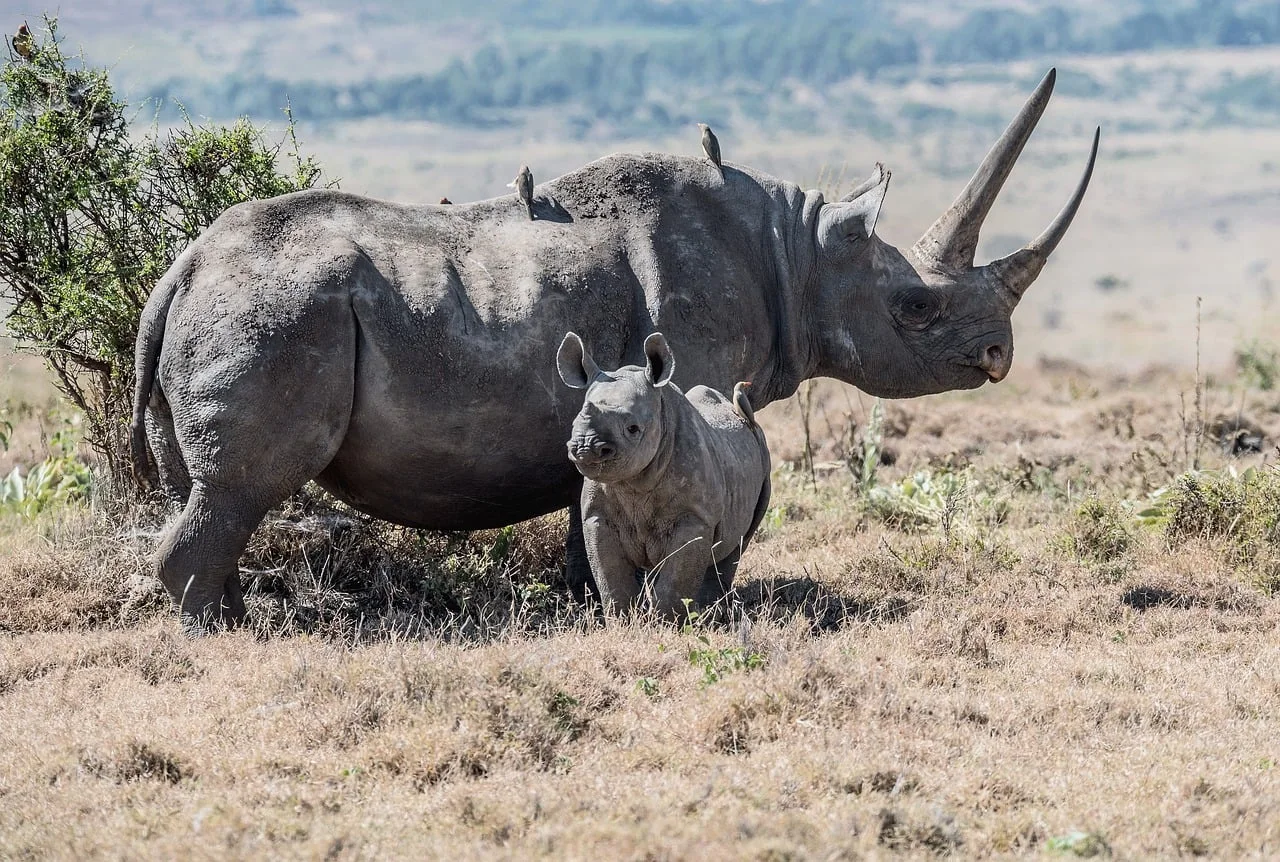
Ol Pejeta combines conventional game viewing with a strong conservation story. It is one of Kenya's most important rhino areas and also supports elephant, buffalo, lion, leopard, cheetah, giraffe and plains wildlife. Conservation visits, including the chimpanzee sanctuary where scheduled, operate around set visiting hours and may therefore be placed in the middle of the day while early morning and late afternoon are reserved for game drives. The conservancy works particularly well for guests who want to understand how tourism, research, livestock management and endangered-species protection interact on the same landscape.
This is also a transfer day, so the itinerary avoids pretending that road travel is empty time. Departure is planned early enough to protect the useful safari or activity window, while comfort stops are taken as needed. Drive times in Kenya vary with traffic, weather, road works, park entry procedures and wildlife stops. If arrival is earlier than expected, the guide can use the remaining light for an introductory activity; if conditions cause delay, the programme protects safety and avoids rushing after dark.
By the end of the activity, the guide will recap the main sightings and experiences and confirm the next day's departure plan where applicable. Exact wildlife sightings, mountain views, migration activity, road conditions and activity access remain subject to nature and local regulations, which is why the itinerary is detailed but intentionally not presented as a guarantee of specific encounters.
Ol Pejeta conservation and wildlife photography
Ol Pejeta Conservancy
Use morning and afternoon light for rhino, elephant, buffalo and predators, with a scheduled conservation visit during the less photogenic midday period.
After the morning briefing, your guide reviews current conditions and adjusts the day's route where necessary. The aim is to preserve the core itinerary while using local knowledge, recent sightings and realistic transfer times to make the day more rewarding.
Ol Pejeta combines conventional game viewing with a strong conservation story. It is one of Kenya's most important rhino areas and also supports elephant, buffalo, lion, leopard, cheetah, giraffe and plains wildlife. Conservation visits, including the chimpanzee sanctuary where scheduled, operate around set visiting hours and may therefore be placed in the middle of the day while early morning and late afternoon are reserved for game drives. The conservancy works particularly well for guests who want to understand how tourism, research, livestock management and endangered-species protection interact on the same landscape.
The day's timing pays particular attention to light. Early and late hours usually provide softer colour, longer shadows and more comfortable wildlife temperatures, while midday can be used for transfers, conservation visits or rest where the itinerary allows. The guide positions the vehicle responsibly, avoids crowding animals and allows behaviour to develop naturally. Photographic opportunities depend on wildlife position, weather and other vehicles, so patience is more useful than chasing a fixed shot list.
By the end of the activity, the guide will recap the main sightings and experiences and confirm the next day's departure plan where applicable. Exact wildlife sightings, mountain views, migration activity, road conditions and activity access remain subject to nature and local regulations, which is why the itinerary is detailed but intentionally not presented as a guarantee of specific encounters.
Ol Pejeta to Lake Nakuru
Lake Nakuru National Park
Travel to Nakuru and spend the afternoon photographing rhino, Rothschild’s giraffe, buffalo and lakeshore birds.
After the morning briefing, your guide reviews current conditions and adjusts the day's route where necessary. The aim is to preserve the core itinerary while using local knowledge, recent sightings and realistic transfer times to make the day more rewarding.
Lake Nakuru is a compact Rift Valley park where lake-edge habitat, woodland, grassland and rocky slopes can be explored within a relatively small area. It is particularly important for rhino conservation and also supports Rothschild's giraffe, buffalo, zebra, antelope, predators and diverse birdlife. Flamingo numbers vary with water chemistry, lake levels and feeding conditions, so the park should not be sold as a guaranteed flamingo spectacle. Its compact scale makes it well suited to focused morning or afternoon drives and to combination routes with the Mara, Naivasha or Laikipia.
This is also a transfer day, so the itinerary avoids pretending that road travel is empty time. Departure is planned early enough to protect the useful safari or activity window, while comfort stops are taken as needed. Drive times in Kenya vary with traffic, weather, road works, park entry procedures and wildlife stops. If arrival is earlier than expected, the guide can use the remaining light for an introductory activity; if conditions cause delay, the programme protects safety and avoids rushing after dark.
By the end of the activity, the guide will recap the main sightings and experiences and confirm the next day's departure plan where applicable. Exact wildlife sightings, mountain views, migration activity, road conditions and activity access remain subject to nature and local regulations, which is why the itinerary is detailed but intentionally not presented as a guarantee of specific encounters.
Lake Nakuru to Masai Mara
Masai Mara National Reserve
Begin with a short early Nakuru session, then continue to the Mara for evening light and the first big-cat search.
After the morning briefing, your guide reviews current conditions and adjusts the day's route where necessary. The aim is to preserve the core itinerary while using local knowledge, recent sightings and realistic transfer times to make the day more rewarding.
The Masai Mara is one of Kenya's richest big-game landscapes, with open grassland, drainage lines, riverine woodland and rolling plains supporting lion, leopard, cheetah, elephant, buffalo, giraffe and large herds of grazers. From roughly the middle of the year into the northern dry season, parts of the wider ecosystem may also hold migrating wildebeest and zebra, but herd positions and river crossings are natural events and cannot be guaranteed. A productive Mara day is deliberately flexible: the guide may stay longer with significant behaviour, move between habitats, or adjust the route when fresh predator activity is reported.
This is also a transfer day, so the itinerary avoids pretending that road travel is empty time. Departure is planned early enough to protect the useful safari or activity window, while comfort stops are taken as needed. Drive times in Kenya vary with traffic, weather, road works, park entry procedures and wildlife stops. If arrival is earlier than expected, the guide can use the remaining light for an introductory activity; if conditions cause delay, the programme protects safety and avoids rushing after dark.
By the end of the activity, the guide will recap the main sightings and experiences and confirm the next day's departure plan where applicable. Exact wildlife sightings, mountain views, migration activity, road conditions and activity access remain subject to nature and local regulations, which is why the itinerary is detailed but intentionally not presented as a guarantee of specific encounters.
Full-day Masai Mara photography
Masai Mara National Reserve
Use an early start and flexible return time to follow big cats, elephants and plains herds. Picnic arrangements allow staying with an important sighting through midday if behaviour warrants it.
After the morning briefing, your guide reviews current conditions and adjusts the day's route where necessary. The aim is to preserve the core itinerary while using local knowledge, recent sightings and realistic transfer times to make the day more rewarding.
The Masai Mara is one of Kenya's richest big-game landscapes, with open grassland, drainage lines, riverine woodland and rolling plains supporting lion, leopard, cheetah, elephant, buffalo, giraffe and large herds of grazers. From roughly the middle of the year into the northern dry season, parts of the wider ecosystem may also hold migrating wildebeest and zebra, but herd positions and river crossings are natural events and cannot be guaranteed. A productive Mara day is deliberately flexible: the guide may stay longer with significant behaviour, move between habitats, or adjust the route when fresh predator activity is reported.
A full day gives the guide freedom to work with wildlife and conditions rather than a fixed return deadline. Expect an early start, a slower midday period or picnic arrangement where appropriate, and renewed activity later in the afternoon. Time can be spent at a rewarding sighting instead of leaving simply to keep a timetable. Routes are varied to avoid repeating the same habitat and to increase the range of landscapes, species and photographic opportunities seen during the day.
By the end of the activity, the guide will recap the main sightings and experiences and confirm the next day's departure plan where applicable. Exact wildlife sightings, mountain views, migration activity, road conditions and activity access remain subject to nature and local regulations, which is why the itinerary is detailed but intentionally not presented as a guarantee of specific encounters.
Masai Mara to Lake Naivasha
Lake Naivasha
Take a final sunrise Mara session, then transfer to Naivasha for an afternoon boat focused on birds, hippos and water-level compositions.
After the morning briefing, your guide reviews current conditions and adjusts the day's route where necessary. The aim is to preserve the core itinerary while using local knowledge, recent sightings and realistic transfer times to make the day more rewarding.
Lake Naivasha introduces a freshwater ecosystem into the safari circuit. Boat outings typically focus on hippos viewed at a respectful distance, African fish eagles, kingfishers, cormorants and other waterbirds, with exact routing determined by wind, water level and local boat guidance. The wider Naivasha area also links naturally with Hell's Gate and the Rift Valley. It is a useful change of pace between long game-drive days because the experience is slower, quieter and viewed from water level rather than through a safari vehicle.
This is also a transfer day, so the itinerary avoids pretending that road travel is empty time. Departure is planned early enough to protect the useful safari or activity window, while comfort stops are taken as needed. Drive times in Kenya vary with traffic, weather, road works, park entry procedures and wildlife stops. If arrival is earlier than expected, the guide can use the remaining light for an introductory activity; if conditions cause delay, the programme protects safety and avoids rushing after dark.
By the end of the activity, the guide will recap the main sightings and experiences and confirm the next day's departure plan where applicable. Exact wildlife sightings, mountain views, migration activity, road conditions and activity access remain subject to nature and local regulations, which is why the itinerary is detailed but intentionally not presented as a guarantee of specific encounters.
Lake Naivasha to Amboseli – sunset elephants
Amboseli National Park
Drive south and enter Amboseli for an afternoon session around wetlands and open plains, watching for elephant silhouettes and mountain light.
After the morning briefing, your guide reviews current conditions and adjusts the day's route where necessary. The aim is to preserve the core itinerary while using local knowledge, recent sightings and realistic transfer times to make the day more rewarding.
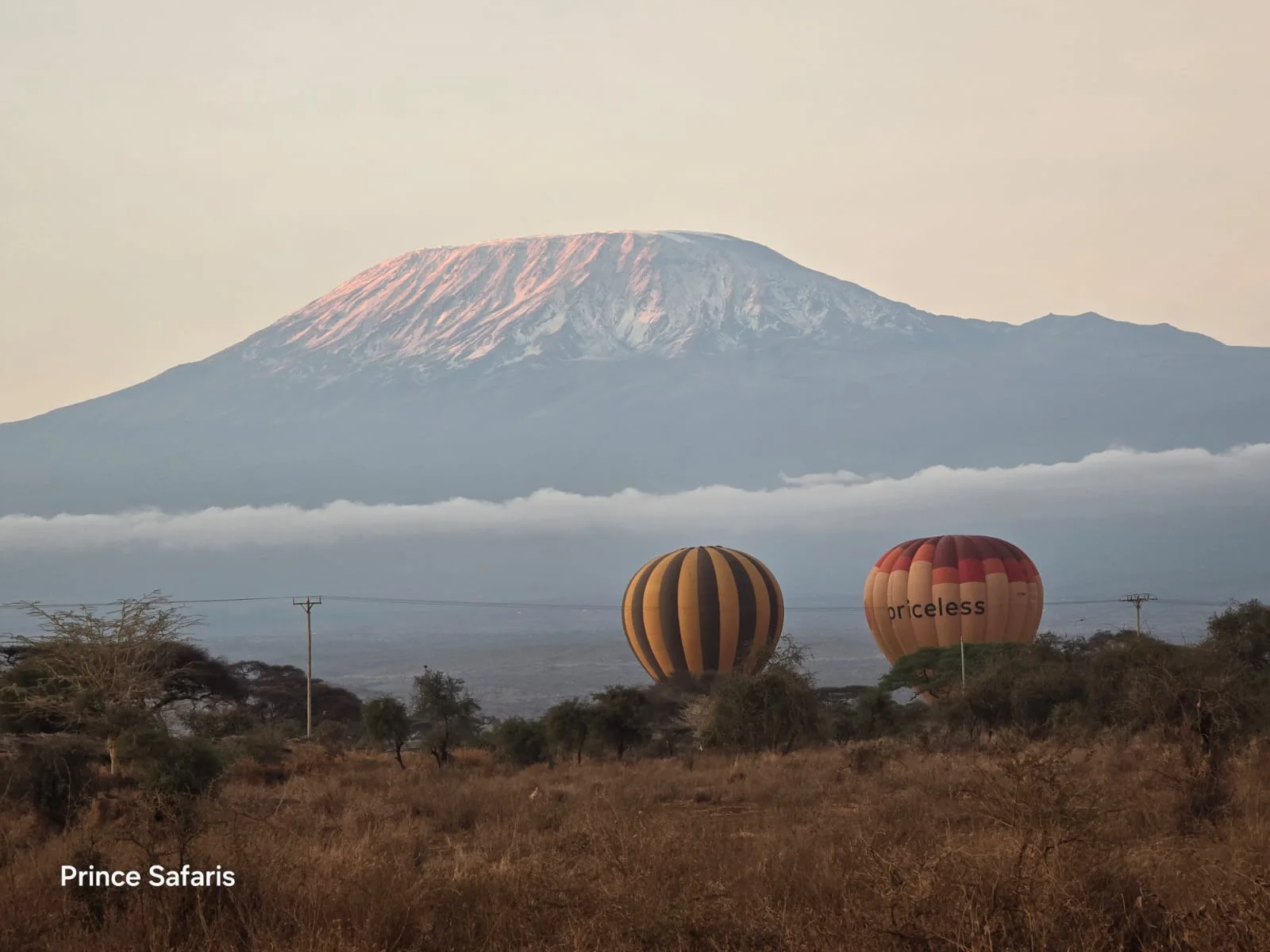
Amboseli is famous for its elephants, open plains and permanent wetland systems fed by underground water from the Kilimanjaro catchment. The combination of dry ground and green marshes creates strong wildlife concentrations and excellent birding. Clear views of Mount Kilimanjaro are weather-dependent, often best in the cooler early morning or late afternoon, so the guide uses the light rather than promising a mountain view at a fixed hour. Lion, buffalo, giraffe, zebra, wildebeest, hyena and numerous antelope may be encountered, but the park's elephant behaviour and landscape are usually the defining experience.
This is also a transfer day, so the itinerary avoids pretending that road travel is empty time. Departure is planned early enough to protect the useful safari or activity window, while comfort stops are taken as needed. Drive times in Kenya vary with traffic, weather, road works, park entry procedures and wildlife stops. If arrival is earlier than expected, the guide can use the remaining light for an introductory activity; if conditions cause delay, the programme protects safety and avoids rushing after dark.
By the end of the activity, the guide will recap the main sightings and experiences and confirm the next day's departure plan where applicable. Exact wildlife sightings, mountain views, migration activity, road conditions and activity access remain subject to nature and local regulations, which is why the itinerary is detailed but intentionally not presented as a guarantee of specific encounters.
Amboseli sunrise photography and Nairobi return
Amboseli National Park
Start before sunrise for the best chance of clear Kilimanjaro conditions and elephant foregrounds. After the morning session, return to Nairobi.
After the morning briefing, your guide reviews current conditions and adjusts the day's route where necessary. The aim is to preserve the core itinerary while using local knowledge, recent sightings and realistic transfer times to make the day more rewarding.
Amboseli is famous for its elephants, open plains and permanent wetland systems fed by underground water from the Kilimanjaro catchment. The combination of dry ground and green marshes creates strong wildlife concentrations and excellent birding. Clear views of Mount Kilimanjaro are weather-dependent, often best in the cooler early morning or late afternoon, so the guide uses the light rather than promising a mountain view at a fixed hour. Lion, buffalo, giraffe, zebra, wildebeest, hyena and numerous antelope may be encountered, but the park's elephant behaviour and landscape are usually the defining experience.
This is also a transfer day, so the itinerary avoids pretending that road travel is empty time. Departure is planned early enough to protect the useful safari or activity window, while comfort stops are taken as needed. Drive times in Kenya vary with traffic, weather, road works, park entry procedures and wildlife stops. If arrival is earlier than expected, the guide can use the remaining light for an introductory activity; if conditions cause delay, the programme protects safety and avoids rushing after dark.
By the end of the activity, the guide will recap the main sightings and experiences and confirm the next day's departure plan where applicable. Exact wildlife sightings, mountain views, migration activity, road conditions and activity access remain subject to nature and local regulations, which is why the itinerary is detailed but intentionally not presented as a guarantee of specific encounters.
What your package covers
These items are included in the quoted safari price unless your written quotation states otherwise.
- Professional English-speaking safari driver-guide.
- Transport in the vehicle type specified for the package, with game-viewing roof where applicable.
- All scheduled game drives, guided visits and activities stated in the itinerary.
- Applicable national park, national reserve or conservancy entry fees for the included programme.
- Accommodation during multi-day safari nights in the selected comfort category; specific properties are confirmed at quotation stage and are not fixed in this package description.
- Meals stated in the day-by-day itinerary.
- Bottled drinking water while travelling in the safari vehicle.
- Pick-up and drop-off at the stated Nairobi, Mombasa, Diani, Malindi or Watamu meeting point where applicable.
- Government taxes and service charges applicable to the included services at the time of quotation.
What to budget for separately
These items are normally outside the package price unless specifically added to your written quotation.
- International flights and any domestic flights not expressly stated as included.
- Kenya visa or electronic travel authorisation costs where applicable.
- Travel, medical, evacuation and cancellation insurance.
- Tips and gratuities for guides, drivers, porters and other service staff.
- Alcoholic drinks, premium beverages and personal purchases.
- Laundry, telephone charges, souvenirs and other personal expenses.
- Optional activities such as hot-air balloon safaris, night drives, spa treatments or additional community visits unless specifically stated as included.
- Pre-safari and post-safari accommodation or transfers not stated in the itinerary.
- Any new or increased statutory park, reserve, conservancy, marine or government charges introduced after a quotation has been confirmed, unless otherwise stated in the booking terms.